

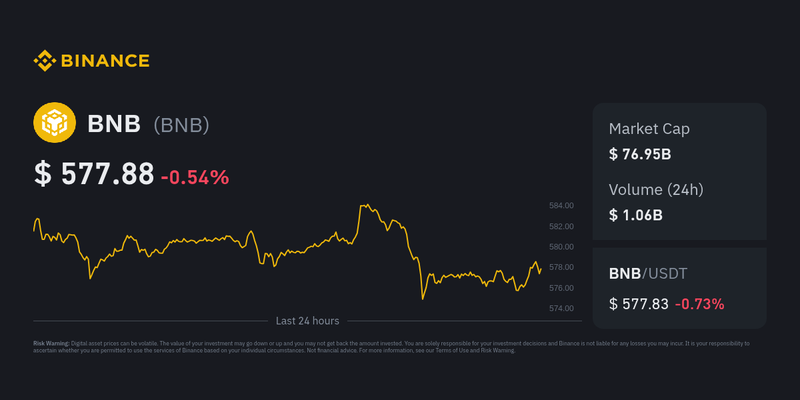
Binance remains the deepest liquidity venue for BNB, which makes it the natural starting point for anyone learning to trade actively rather than simply buy and hold. Whether you’re placing your first spot order or exploring futures, understanding how to trade BNB on Binance means getting comfortable with the platform’s tools, chart analysis, and order types before risking real capital. This guide from BNB Guides breaks down what you need to know, step by step.
This article is for educational purposes only and isn’t financial advice. Trading involves risk, and you should do your own research before making decisions.
Before you place an order, it helps to understand the two main ways to trade BNB on Binance.
Spot trading is generally the more beginner-friendly starting point, since it avoids liquidation risk and margin calls. Futures introduce more complexity and are typically better suited to traders who already understand how leverage and funding rates work.
A third option worth knowing about is Convert, which lets you swap BNB for another asset at a quoted rate without placing a traditional order. It’s simple, but the rate is usually slightly less favorable than a well-timed limit order on the spot market.
Tip: If you’re new to trading, spend time on spot markets first before adding leverage into the mix.
Getting set up properly makes it easier to trade BNB on Binance efficiently once you’re ready to place orders.
Before you start, make sure you have:
Tip: Set up an anti-phishing code in your account settings. This ensures legitimate Binance emails include your personal code, making it easier to spot fake messages.
Once your account is ready, understanding the chart becomes essential to trade BNB on Binance with any consistency.
Binance’s trading interface includes:
Analysis generally falls into two categories. Technical analysis focuses on price patterns and indicators, while fundamental analysis considers BNB’s broader ecosystem activity, such as network usage and token burns. Many traders combine both approaches rather than relying on just one.
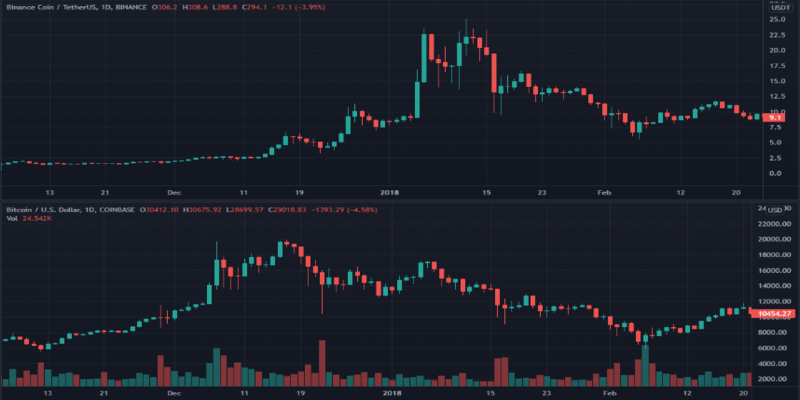
Timeframes matter too. Shorter charts, like 15-minute or 1-hour candles, suit active day trading, while daily or weekly charts give a clearer picture of longer-term trends. Switching between timeframes before entering a trade often reveals context that a single chart view misses.
Tip: Practice reading charts on a demo account or with small amounts before committing significant capital, especially if you’re still learning to interpret indicators.
Choosing the right order type matters just as much as timing when you trade BNB on Binance. Here’s a quick breakdown:
| Order Type | How It Works | Best For |
| Market order | Executes immediately at the current price | Fast entry or exit when timing matters most |
| Limit order | Executes only at your specified price or better | Controlling entry price, avoiding slippage |
| Stop-limit order | Triggers a limit order once a stop price is hit | Managing risk on existing positions |
| Trailing stop | Follows price movement to lock in gains | Protecting profits during a trending market |
Fees also affect your overall returns. Standard spot trading fees apply per transaction, but paying fees in BNB typically reduces the cost. Futures trading carries a separate fee structure, along with funding rate payments that shift between long and short positions periodically.
Tip: Check the current fee schedule directly on Binance before trading, since rates and discounts can change with VIP tiers and promotions.
However you choose to trade BNB on Binance, managing risk matters more than chasing any single trade.
Keep these practices in mind:
Leverage in particular deserves caution. A small price move against a highly leveraged position can result in liquidation, wiping out your margin quickly. Starting with low leverage, or avoiding it entirely while learning, reduces this risk significantly.
Position sizing deserves equal attention. Many experienced traders risk only a small percentage of their total capital on any single trade, which means no individual loss can meaningfully damage the overall account. This discipline often matters more to long-term results than picking winning trades.
Tip: Treat early trades as a learning process. Small, well-documented losses teach far more than one large, undocumented one.
Learning to trade BNB on Binance comes down to combining the right tools, a clear understanding of chart analysis, and disciplined risk management. Spot trading offers a straightforward starting point, while futures require a deeper understanding of leverage and margin before diving in.
Whichever approach you choose, prioritize account security, understand your fees, and build a consistent process before scaling up your position sizes. The traders who last are usually the ones who treat every trade as part of a longer strategy, not a single bet, and who review their decisions honestly rather than only remembering the wins.


 Bitcoin (BTC) $ 86,243.00 0.46%
 Ethereum (ETH) $ 2,749.40 0.73%
 Tether (USDT) $ 0.999894 0.01%
 BNB (BNB) $ 784.93 2.38%
 XRP (XRP) $ 1.57 3.3%
 USDC (USDC) $ 0.999898 0%
 Solana (SOL) $ 117.94 1%
 TRON (TRX) $ 0.341680 0.65%
 Zcash (ZEC) $ 1,523.62 4.69%
 Figure Heloc (FIGR_HELOC) $ 1.04 2.58%