

A comprehensive PancakeSwap tutorial is essential for anyone looking to navigate the decentralized finance (DeFi) landscape on the BNB Chain in 2026. As the leading decentralized exchange (DEX) natively built on this network, the platform has undergone massive technological upgrades to make trading faster, cheaper, and highly customizable.
For Web3 investors navigating the markets, learning how to utilize this automated market maker (AMM) is no longer optional. It is a core requirement for on-chain wealth generation. This updated PancakeSwap tutorial provides a comprehensive, expert-level guide to mastering the platform’s trading and earning mechanics safely.
Before you can execute a single swap or deposit assets into a yield farm, you must prepare a secure environment. Because PancakeSwap is non-custodial, you retain full ownership of your private keys.
On BNB Guides, we consistently advise traders to execute a small test swap of just a few dollars first to verify that their connections and wallet permissions are functioning correctly. This initial safety check prevents irreversible mistakes with larger capital pools later. Following a proper PancakeSwap tutorial protocol means putting security first.
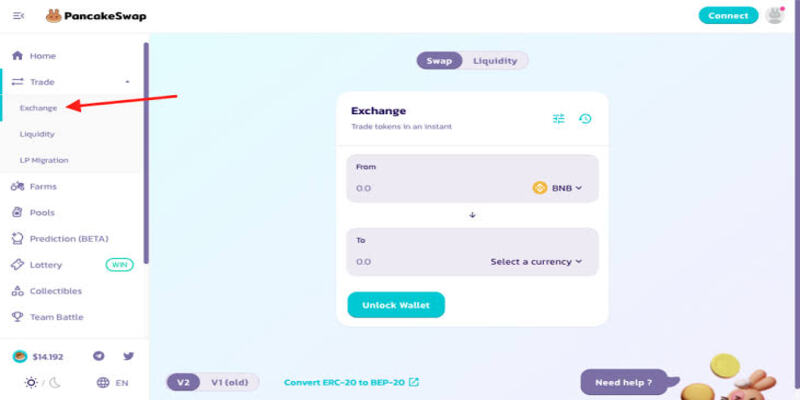
The primary interface of the platform is designed around intuitive, permissionless asset conversion. This section of our PancakeSwap tutorial walks you through the precise actions required to trade tokens and manage advanced parameters like slippage tolerance.
Within seconds, the transaction will settle on-chain, and your new token balances will update automatically. This seamless trade execution is the cornerstone of any practical PancakeSwap tutorial.
A common point of confusion for new traders is slippage, which represents the percentage difference between the estimated price and the actual execution price. Volatile market conditions or thin liquidity pools can cause significant price fluctuations while your transaction is waiting to be processed.
To help you configure this safely, here is a detailed breakdown of the most common slippage ranges:
| Slippage Range | Best Use Case | Primary Operational Risk |
| 0.1% to 0.5% | Highly liquid trading pairs like BNB and USDT | High probability of transaction failure if prices move quickly |
| 1.0% to 3.0% | Standard mid-cap tokens with moderate volatility | Small risk of being front-run by predatory MEV bots |
| 5.0%+ | Newly launched tokens experiencing extreme volatility | Serious risk of receiving significantly fewer tokens than estimated |
Understanding how to adjust these parameters is vital for anyone following a PancakeSwap tutorial. To change your limits, click the gear icon on the swap interface and manually define your slippage tolerance. Setting this parameter too low can lead to failed transactions and wasted gas, while setting it too high exposes your swap to predatory front-running bots.
PancakeSwap is far more than a simple token converter; it is a massive passive income generator. Advanced traders utilize the platform’s liquidity pools and Syrup Pools to earn continuous yields on their idle digital assets. This phase of our PancakeSwap tutorial focuses on maximizing those cash flows.
However, you must remain aware of impermanent loss. This phenomenon occurs when the price ratio of your deposited tokens changes relative to when you deposited them, potentially leaving you with less value than if you had simply held the assets in your wallet. A thorough PancakeSwap tutorial must always highlight these financial risks.
The decentralized nature of Web3 means you are your own bank, which requires a proactive stance toward security. Integrating solid defense habits into your routine will protect your hard-earned yields from bad actors.
By utilizing these safety steps and referring to this PancakeSwap tutorial as your primary reference guide, you can comfortably explore the high-yield opportunities of DeFi. Maintain your discipline, manage your risks carefully, and continue learning to stay ahead in the rapidly shifting Web3 ecosystem.
The process of mastering a PancakeSwap tutorial is not a one-time lesson but an evolving discipline. As the Binance ecosystem expands with new layer-2 integrations and core consensus upgrades in 2026, the variables dictating on-chain asset prices will continue to change rapidly.

 Bitcoin (BTC) $ 64,421.00 0.65%
 Ethereum (ETH) $ 1,877.21 1.67%
 Tether (USDT) $ 0.999298 0.01%
 BNB (BNB) $ 576.99 0.07%
 USDC (USDC) $ 0.999942 0.01%
 XRP (XRP) $ 1.11 0.06%
 Solana (SOL) $ 76.24 1.29%
 TRON (TRX) $ 0.322977 0.52%
 Figure Heloc (FIGR_HELOC) $ 1.04 0.02%
 Hyperliquid (HYPE) $ 64.53 4.13%