
Transaction slippage tolerance is a crucial parameter that decentralized finance (DeFi) traders must master to protect their capital in the volatile on-chain environment of 2026. Slippage occurs when there is a difference between the expected price of a cryptocurrency swap and the actual price at which the transaction executes. Because decentralized pools rely on automated market makers, large orders or sudden market fluctuations can cause dramatic price shifts mid-transaction. Setting your threshold incorrectly exposes you to massive operational risks.
At BNB Guides, we analyze advanced fee mechanics and transaction configurations to help you trade with precision. Safely calibrating your swap parameters requires finding a delicate balance between transaction speed and execution safety. Much like verifying the withdrawal limits and system rules of a highly regulated online platform like AE888 to ensure your funds are handled securely, setting up your Web3 configurations beforehand guarantees you do not get burned during highly volatile events.
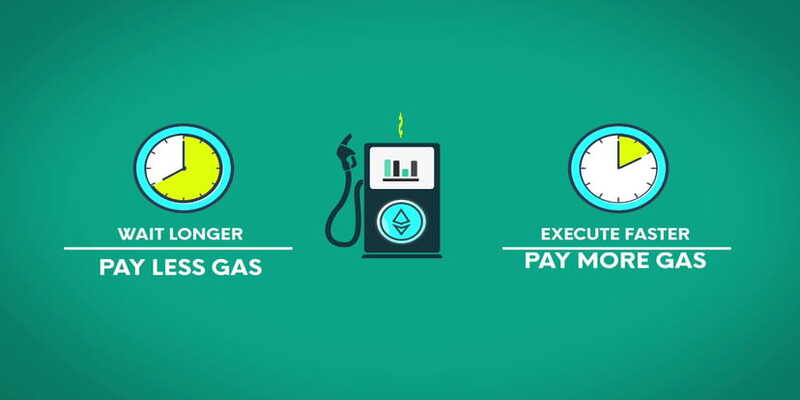
When setting your transaction slippage tolerance, you must balance two opposing on-chain threats. If you set your threshold too low, your transaction will fail whenever the market price moves even slightly, costing you non-refundable gas fees. Conversely, if you set it too high, you leave your trade wide open to malicious frontrunning bots that will artificially manipulate the pool to execute your swap at the worst possible price.
To help you manage these trade-offs, the table below compares how different configurations for your transaction slippage tolerance directly impact your trading success rate and overall security:
| Slippage Threshold Setting | Main Execution Hazard | Non-Refundable Gas Fee Risk | Frontrunning (MEV) Vulnerability | Recommended Asset Class |
| Tight (0.1% – 0.5%) | Frequent transaction failures & reverts | Extremely High | Very Low | Deeply liquid stablecoins |
| Moderate (0.5% – 2.0%) | Occasional execution delays | Low to Medium | Low | Major assets (BNB, ETH, BTC) |
| Loose (2.0% – 5.0%+) | Poor execution price (bad rates) | Zero | High to Extremely High | Highly volatile memecoins |
Just as modern players study the risk metrics and verification procedures of premium platforms like AE888 to secure their transfers, decentralized traders must carefully analyze these three slippage zones before broadcasting a transaction to the public mempool.
The first major risk of an improperly optimized transaction slippage tolerance is the financial drain of failed smart contract executions. In 2026, network congestion remains highly dynamic, and a tight slippage limit can easily cause a swap to time out, leaving you with zero swapped tokens and a massive gas bill.
To mitigate the cost of constantly reverted trades without exposing yourself to exploitation, implement these protective routines:
By managing these on-chain variables, you can confidently run transactions with tighter slippage settings without triggering constant, expensive execution failures.
The second and more dangerous risk is the sandwich attack, a highly prevalent form of Maximal Extractable Value (MEV) exploitation. When you set a high transaction slippage tolerance, public searcher bots will spot your transaction in the mempool, buy the asset right before you to push the price up to your maximum limit, and then immediately sell it to pocket the difference.
Protect your digital assets from aggressive frontrunning bots by adopting these advanced transaction security tips:
Mastering these defensive habits ensures that you remain completely in charge of your decentralized trading journey. Treat every transaction parameter as a critical financial boundary, evaluate active pool depths carefully, and always employ a balanced transaction slippage tolerance to safeguard your crypto assets.
 Bitcoin (BTC) $ 78,865.00 1.14%
 Ethereum (ETH) $ 2,474.79 1.45%
 Tether (USDT) $ 0.999733 0.02%
 BNB (BNB) $ 690.72 0.63%
 XRP (XRP) $ 1.39 1.69%
 USDC (USDC) $ 0.999842 0.01%
 Solana (SOL) $ 103.88 1.18%
 TRON (TRX) $ 0.331619 1.47%
 Figure Heloc (FIGR_HELOC) $ 1.00 0%
 Hyperliquid (HYPE) $ 84.21 3.99%