

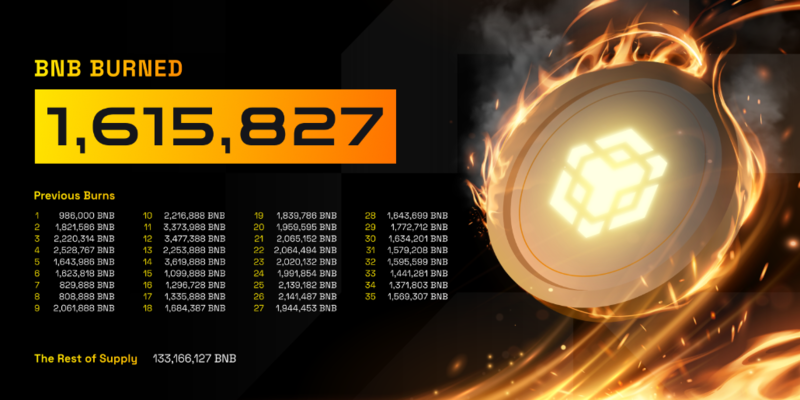
BNB auto burn acts as the foundation of BSC’s economic model in 2026, systematically driving the network’s deflationary mechanics while keeping transaction costs highly competitive. While many Layer 1 networks rely heavily on high transaction fees to sustain validator rewards, the BNB Smart Chain (BSC) has taken a fundamentally different path. At the center of this economic model is the automated burning system, designed to reduce total token supply without placing a heavy cost burden on end users.
For developers and retail participants alike, understanding the connection between token burning and operational costs is essential. This guide explains how the modern BNB auto burn framework works to keep BSC gas fees highly competitive in 2026.
Understanding the direct connection between BNB auto burn dynamics and affordable gas fees requires looking closely at how on-chain metrics interact. In 2026, BSC successfully maintains ultra-low transaction fees because of three distinct, formula-driven economic safeguards:
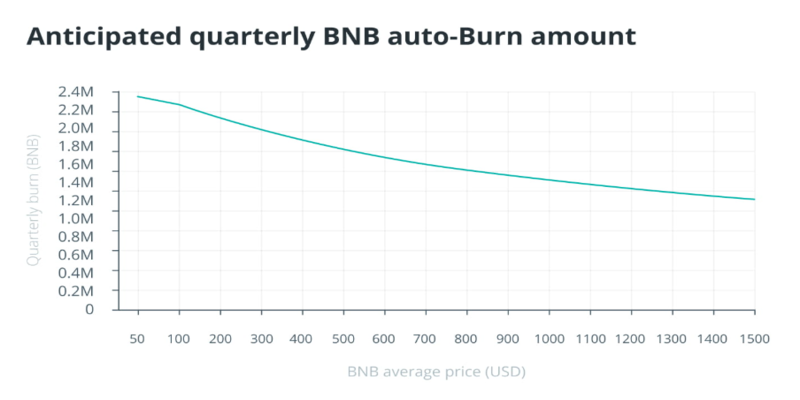
The first reason BSC maintains cheap gas fees is how the BNB auto burn mechanism manages total token supply. Unlike early burning models that relied on manual exchange revenue calculations, the modern protocol is fully automated, deterministic, and executed directly on-chain. The formula uses quarterly average asset pricing and block generation rates to calculate exactly how much BNB must be removed:
$$B = \frac{N \times K}{P}$$
Where $B$ is the quarterly BNB to be burned, $N$ is the total number of blocks produced during the quarter, $P$ is the average BNB price, and $K$ is a constant price anchor.
The algorithm is designed with a balancing feedback loop. When market volatility shifts asset prices, the burn rate adjusts automatically to maintain the long-term target of 100 million BNB. This structural stability prevents the wild, speculative network inflation that often causes sudden gas fee spikes on other Layer 1 platforms.
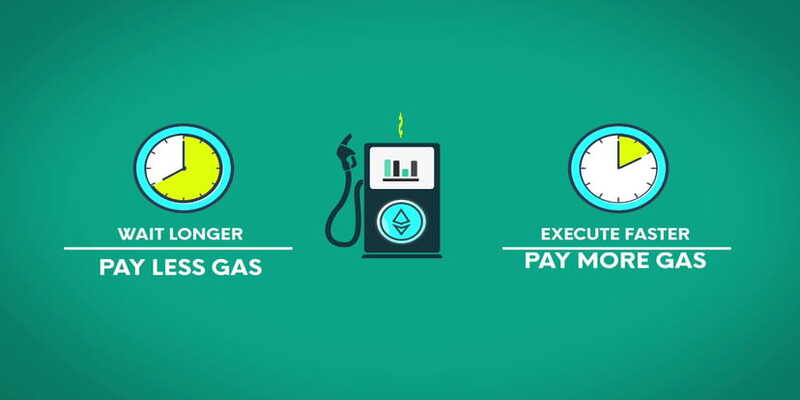
These structural differences explain why executing a smart contract on one chain costs pennies while costing dollars on the other. For developers launching decentralized applications with high user interaction rates, the Proof of Staked Authority (PoSA) model combined with the BNB auto burn program provides a predictable financial environment. This architectural divergence is the cornerstone of the cost debate.
The second reason is the seamless interaction between the BNB auto burn program and the BEP-95 real-time fee-burning mechanism. While the quarterly BNB auto burn handles macroscopic supply control, BEP-95 processes gas fees on a block-by-block basis. A fixed percentage of the gas fee collected by validators in every block is immediately and permanently sent to a “blackhole” burn address.
This parallel system ensures that validators are not incentivized to artificially inflate transaction fees. Because a significant portion of their gas revenue is burned instantly, validators rely on consistent network throughput rather than high per-transaction costs to earn rewards. This alignment of incentives keeps BSC gas prices remarkably low.
To illustrate how these two mechanics cooperate in 2026, the table below outlines their individual properties:
| Burn Mechanism | Execution Interval | Primary Calculation Driver | Primary Network Benefit |
| BNB Auto Burn | Quarterly | Asset price & blocks produced | Long-term economic stability |
| BEP-95 Real-Time Burn | Every single block | Dynamic gas consumption | Disincentivizes validator fee-gouging |

The third major reason BSC maintains low fees is the structural execution of the burn itself. Following the completion of the BNB Chain Fusion, all processes related to the BNB auto burn are executed entirely on BSC. Moving these processes away from external architectures has streamlined block verification and eliminated the computational latency that typically increases network overhead.
Because the system relies on real-time on-chain data, transactions are verified with higher efficiency. This reduced computation translates directly into lower base execution costs for smart contracts. When interacting with platforms like BNB Guides to monitor network metrics or optimize DeFi strategies, users benefit directly from this highly optimized, unified architecture.
To track the progress of these burn mechanics, the following metrics illustrate the supply state as of 2026:
| Supply & Burn Metrics (July 2026) | Value / Progress State |
| Initial Starting Supply | 200,000,000 BNB |
| Target End-State Supply | 100,000,000 BNB |
| Total Cumulative Burned Supply | ~66.8 Million BNB |
| Real-Time BEP-95 Burn Total | Over 291,000 BNB |
The programmatic design of the BNB auto burn serves as a vital anchor for the BSC ecosystem in 2026. By combining a predictable quarterly supply reduction with real-time gas burning, the network prevents both inflationary supply dilution and validator-induced fee spikes.
Ultimately, the steady progression of the BNB auto burn shows that a blockchain can successfully balance a deflationary token model with ultra-cheap transaction fees. For retail users and high-throughput applications, this predictable and cost-efficient environment ensures that BSC remains a highly practical and scalable choice for decentralized finance.

 Bitcoin (BTC) $ 78,577.00 0.6%
 Ethereum (ETH) $ 2,471.74 1.38%
 Tether (USDT) $ 0.999793 0.01%
 BNB (BNB) $ 690.33 0.65%
 XRP (XRP) $ 1.38 0.66%
 USDC (USDC) $ 0.999884 0%
 Solana (SOL) $ 103.09 0.25%
 TRON (TRX) $ 0.331720 1.47%
 Figure Heloc (FIGR_HELOC) $ 1.00 0%
 Hyperliquid (HYPE) $ 83.44 2.99%