
The year 2026 has witnessed a massive surge in Web3 applications, making cost-efficiency a top priority for active crypto users. If you are regularly executing smart contracts or swapping tokens on the BNB Chain ecosystem, understanding how BNB gas fees are calculated can save you a substantial amount of capital.
At BNB Guides, we analyze the technical micro-mechanics of decentralized networks to help you navigate on-chain environments with maximum profitability. Transaction costs do not have to be an unpredictable expense. By mastering the core mechanics of the network’s fee structure and adjusting your transaction habits, you can bypass network congestion and significantly lower your daily overhead.

To effectively reduce your transaction costs, you must first understand how BNB gas fees are actually calculated. Unlike the traditional legacy payment structures that charge flat percentage rates, decentralized transactions rely on a dynamic, two-part mathematical formula:
Total Gas Fee = Gas Limit x Gas Price
Let’s break down these two essential components so you can see exactly where your money goes during a transaction:
If you set your gas limit too low in an attempt to save money, the smart contract will run out of computational fuel mid-execution, causing the transaction to fail while still consuming your BNB gas fees. Conversely, if you set the gas price too low during peak congestion, your transaction will remain stuck in the mempool indefinitely.
The price of executing a transaction on-chain is never static. To successfully avoid high BNB gas fees, you must anticipate the main structural factors that drive network-wide pricing spikes:
Understanding these market triggers allows you to time your transactions wisely, keeping your overall costs minimal.
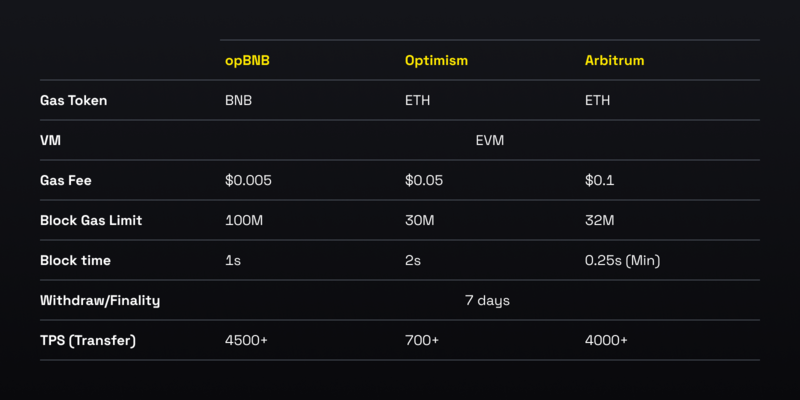
The architectural evolution of the BNB ecosystem has given users multiple options for processing transactions, especially when trying to lower your overall BNB gas fees. To help you choose the most cost-effective path, the table below outlines the clear performance and pricing differences between the primary Layer-1 network (BNB Smart Chain) and the Layer-2 scaling solution (opBNB) in 2026:
| Network Layer | Average Gas Price | Typical Transfer Cost (USD) | Best Suited For |
| BNB Smart Chain (L1) | 1.0 – 3.0 Gwei | $0.01 – $0.03 | Large DeFi deposits, high-value NFT mints, major asset settlements |
| opBNB (L2 Rollup) | 0.00001 Gwei | $0.001 – $0.005 | High-frequency micro-transactions, gaming actions, daily transfers |
By shifting your everyday dApp interactions, Web3 gaming, and minor token transfers over to the opBNB Layer-2 network, you can bypass L1 congestion entirely and reduce your regular transaction overhead by up to 90%.
You do not have to accept high transaction costs as an unavoidable reality of using Web3. By adopting these expert execution habits, you can take complete control over your Web3 wallet and protect your capital from unnecessary network inflation:
By integrating these tactical steps into your daily on-chain routine, you will keep your BNB gas fees to an absolute minimum while maintaining rapid, reliable transaction speeds across the entire BNB Chain ecosystem.
Mastering your transaction settings is one of the most valuable skills you can develop as a Web3 user in 2026. While the BNB Chain foundation continues to optimize L1 performance and expand the opBNB scaling ecosystem, keeping your BNB gas fees low remains under your direct control.
By timing your high-value smart contract interactions during low-congestion hours, utilizing Layer-2 solutions, and manually adjusting your Gwei limits, you can easily neutralize market-driven spikes. Proactively optimizing your BNB gas fees is a core part of disciplined portfolio management, ensuring that your valuable capital is preserved for actual yield and trading opportunities rather than being lost to network overhead.
 Bitcoin (BTC) $ 85,836.00 5.85%
 Ethereum (ETH) $ 2,758.85 5.38%
 Tether (USDT) $ 1.00 0.04%
 BNB (BNB) $ 798.46 5.25%
 XRP (XRP) $ 1.49 6.8%
 USDC (USDC) $ 1.00 0.03%
 Solana (SOL) $ 117.71 7.76%
 TRON (TRX) $ 0.344927 0.19%
 Zcash (ZEC) $ 1,496.46 3.6%
 Figure Heloc (FIGR_HELOC) $ 1.04 0%