


Reduce Binance fees with BNB by activating the exchange’s built-in fee discount option. In 2026, keeping your transaction costs low is critical for protecting your trading margins. While Binance offers a 25% discount on spot trading and a 10% discount on USD-M futures, many users still pay full price due to simple configuration errors.
At BNB Guides, we help you troubleshoot these technical issues. If you want to reduce Binance fees with BNB, you must look beyond basic settings to ensure the automated deduction system works on every trade.
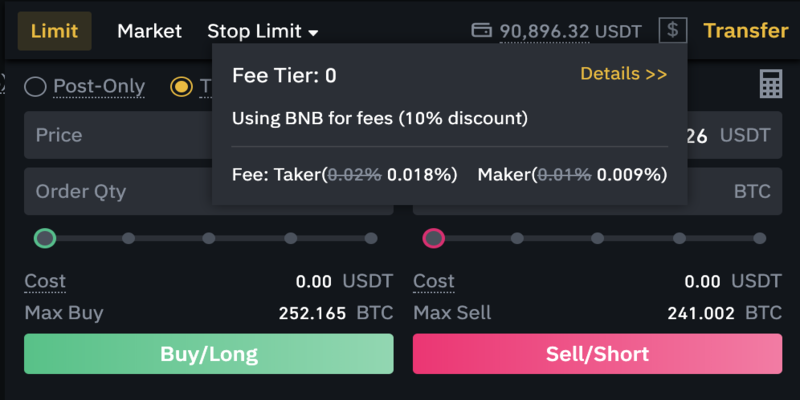
Before troubleshooting your account settings, you must understand how the exchange structures its trading costs. Every time you buy or sell a cryptocurrency, Binance charges a fee based on your monthly trading volume and your VIP tier status.
To keep your operations profitable, you must navigate three primary cost categories: spot trading, futures contracts, and margin borrowing. Spot fees start at a baseline of 0.1% for standard trades. Futures fees are lower but execute at higher frequencies, making them highly sensitive to price adjustments. Margin interest rates accumulate hourly, adding another layer of expense.
Understanding these rates helps you identify where your money is going. Activating the native utility token payment system is the fastest way to reduce Binance fees with BNB across all of these categories.
To show how different transaction types accumulate costs, the table below outlines the standard baseline costs without optimization:
| Market Type | Standard Maker Fee | Standard Taker Fee | Target Optimized Rate with BNB |
| Spot Market | 0.100% | 0.100% | 0.075% (25% off) |
| USD-M Futures | 0.020% | 0.050% | 0.018% / 0.045% (10% off) |
| COIN-M Futures | 0.015% | 0.050% | No BNB deduction discount |

Many active users wonder why their trading statements still show standard transaction costs despite keeping a BNB balance. If you want to reduce Binance fees with BNB successfully, you must avoid these six common setup errors:
Resolving these issues requires a quick, deliberate audit of your account configuration. Following a strict technical routine is the safest way to reduce Binance fees with BNB without leaving your settings to chance:
To help you calculate your potential savings, the table below compares your costs when you successfully reduce Binance fees with BNB over different trading volumes:
| Monthly Trading Volume | Standard Spot Fees (0.1%) | Optimized Spot Fees (0.075%) | Total Capital Preserved |
| $10,000 | $10 | $7.50 | $2.50 |
| $100,000 | $100 | $75.00 | $25.00 |
| $1,000,000 | $1,000 | $750.00 | $250.00 |
Sustaining low trading costs over the long term requires adopting disciplined asset management habits. Experts use specific methods to reduce Binance fees with BNB automatically and keep their balances optimized:
Minimizing your transaction overhead is just as important as predicting market direction when it comes to long-term profitability. While the 25% spot discount is highly lucrative, it is your responsibility to monitor your wallet configurations and prevent simple technical oversights from disrupting your settings.
By reviewing your auto-deduction toggles, keeping your fee reserves in the correct wallet layers, and leaving a flexible buffer of unlocked tokens, you can consistently reduce Binance fees with BNB on every trade. Treat transaction cost management as an active part of your risk strategy, and enjoy more efficient, profitable trading throughout 2026.
 Bitcoin (BTC) $ 64,048.00 1.41%
 Ethereum (ETH) $ 1,868.86 3.02%
 Tether (USDT) $ 0.999248 0%
 BNB (BNB) $ 574.95 0.82%
 USDC (USDC) $ 0.999861 0%
 XRP (XRP) $ 1.09 2.15%
 Solana (SOL) $ 75.54 2.84%
 TRON (TRX) $ 0.322886 0.6%
 Figure Heloc (FIGR_HELOC) $ 1.04 0.08%
 Hyperliquid (HYPE) $ 62.58 7.78%