

Is BNB chain safe in 2026? This question remains one of the most frequently asked queries among Web3 developers, liquidity providers, and retail investors navigating the decentralized finance (DeFi) landscape. As blockchain infrastructure reaches maturity, comparing the security frameworks of major Layer 1 networks is crucial. Many active traders routinely ask, is BNB chain safe for high-volume transactions when compared to Ethereum’s heavily decentralized environment?
The perception of network safety has shifted from mere validator counts to advanced client architecture, exploit mitigation systems, and real-time threat response. Examining how the BNB Smart Chain (BSC) fares against Ethereum’s gold-standard security model in 2026 reveals critical architectural differences. Both ecosystems deploy distinct defensive layers to protect billions of dollars in on-chain assets.
To determine if the is BNB chain safe premise holds water, we must first look at the latest upgrades to its node client architecture. Historically, running on a single modified Go-Ethereum (Geth) client presented a systemic risk; a single software bug could theoretically halt the entire blockchain. In 2026, BSC successfully mitigates this risk by executing a robust dual-client strategy.
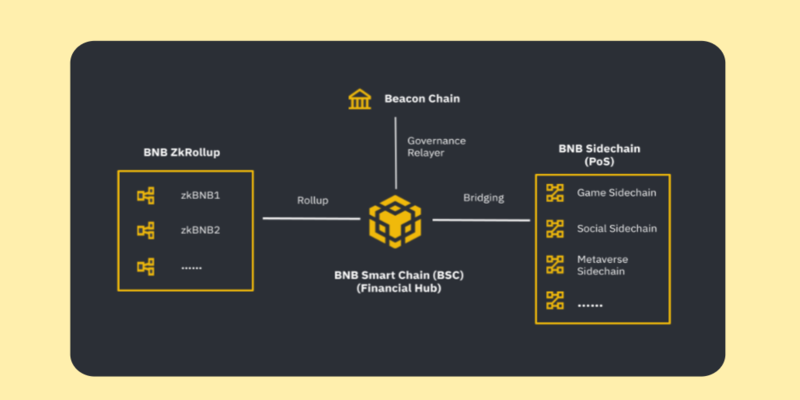
By implementing a dual-client setup, the network ensures high redundancy. The transition to a secondary, high-performance client developed in Rust drastically reduces the likelihood of consensus-level exploits. This strategic shift enhances network resilience while pushing technical execution limits further.
This dual-client architecture is key to answering whether is BNB chain safe at a structural level. It mirrors the client diversity strategy that has long protected Ethereum from total network failure, bringing BSC up to institutional security standards.
Many institutional investors often ask: is BNB chain safe when it relies on a smaller validator set than Ethereum? Ethereum secures its mainnet through a highly decentralized Proof of Stake (PoS) system containing hundreds of thousands of active validators. This massive distribution makes an physical attack or collusive 51% takeover practically impossible.
BSC operates on a Proof of Staked Authority (PoSA) consensus mechanism, focusing on speed and cost-efficiency. To understand how the physical security of these two networks matches up, consider the structural comparisons shown below:
| Security Attribute | BNB Smart Chain (2026) | Ethereum Mainnet (2026) |
| Consensus Mechanism | Proof of Staked Authority (PoSA) | Proof of Stake (PoS) |
| Active Validator Count | 40 performance-focused nodes | Over 1 million distributed nodes |
| Client Software Diversity | Dual-Client (Geth & Reth) | Multi-Client (Prysm, Lighthouse, Geth, Nethermind) |
| Block Finality Time | ~1.125 seconds | ~12 to 15 minutes |
| Primary System Focus | High throughput & low latency | Maximum decentralization & security |
While the validator pool on BSC is more concentrated, the selected active nodes are hosted by highly reputable, enterprise-grade infrastructure providers. This specialized hosting makes the network highly resistant to traditional physical outages. Therefore, if you ask, is BNB chain safe from validator collusion, the Answer lies in the strict staking requirements and reputational risks associated with running these premium nodes.
Another vital aspect of evaluating whether is BNB chain safe involves analyzing how the platform handles smart contract vulnerabilities. Because BSC maintains complete EVM (Ethereum Virtual Machine) compatibility, it shares the exact same smart contract coding standards as Ethereum. This means any vulnerability present in Solidity code on Ethereum will behave identically on BSC.
However, because transaction fees are substantially cheaper on BSC, malicious actors can deploy and test exploit scripts with very little financial friction. To counter this unique vector, the BSC ecosystem relies heavily on automated monitoring and proactive blacklisting:
When assessing if is BNB chain safe against dynamic exploits, these community-led security layers prove highly effective. They act as a digital shield, protecting less experienced users from interacting with unverified or malicious smart contracts.
Looking closely at third-party audits helps answer whether is BNB chain safe in the face of decentralized finance (DeFi) exploits. Leading blockchain security firms conduct rigorous annual assessments of the core blockchain software, consensus protocols, and bridge architectures. In 2026, audit reports highlight that the transition to unified on-chain operations has closed several security loopholes.

Following the complete decommissioning of the legacy Beacon Chain (BNB Chain Fusion), all governance and staking mechanisms have been unified directly on the BNB Smart Chain. This consolidation drastically reduces the attack surface by eliminating the need for complex cross-chain communications.
| Security Audit Category | 2026 Audit Findings & Implementations |
| Core Protocol Audits | Zero critical vulnerabilities found in the native PoSA consensus code. |
| Bridge Security | Elimination of legacy cross-chain bridges; unified BSC architecture is fully audited. |
| Uptime & Network Defense | 100% uptime sustained through 2025 and H1 2026 under heavy load. |
| Mempool Protections | Introduction of optimized transaction routing to mitigate front-running and MEV exploits. |
These systematic audit results provide a solid foundation for answering the question: is BNB chain safe for long-term storage? The data suggests that the core network is remarkably secure, with most historical exploits occurring at the dApp layer rather than within the blockchain itself.
When summarizing the technical evolution of the network, the ultimate question remains: is BNB chain safe for mass retail and institutional adoption? While Ethereum remains the industry standard for absolute decentralization and sovereign security, BNB Chain has built a highly secure, enterprise-grade alternative that successfully balances performance with advanced threat mitigation protocols.
For users consulting resources like BNB Guides for safety protocols, the consensus is clear. While it uses a different structural approach than Ethereum, the answer to whether is BNB chain safe is a definitive yes for most modern Web3 use cases, provided that users follow standard security practices such as utilizing hardware wallets and interacting only with fully audited smart contracts.


 Bitcoin (BTC) $ 64,122.00 1.31%
 Ethereum (ETH) $ 1,869.68 2.65%
 Tether (USDT) $ 0.999286 0.01%
 BNB (BNB) $ 575.39 0.62%
 USDC (USDC) $ 0.999849 0%
 XRP (XRP) $ 1.10 0.93%
 Solana (SOL) $ 75.82 2.28%
 TRON (TRX) $ 0.322915 0.45%
 Figure Heloc (FIGR_HELOC) $ 1.04 0.12%
 Hyperliquid (HYPE) $ 62.29 8.13%